Key Research
The Collective Intelligence Behind Every Choice
We don't have a paid advisory board, and we're not going to invent one. Independent early-childhood research is public, and anyone can read it — including you. So instead of names on a page, here is the evidence that actually shapes what we stock, with links


Neuroscience & Cognitive Development
🧠The first years build the architecture
Harvard's Center on the Developing Child describes early brain development as construction: more than a million new neural connections form every second in the first few years, shaped by responsive back-and-forth with a caregiver — what researchers call serve and return. What we do with it: we favour products that pull an adult into the loop, and we're sceptical of anything engineered to occupy a child alone. Source: Center on the Developing Child, Harvard University — Brain Architecture and Serve and Return → developingchild.harvard.edu
🗣The type of toy changes how much you talk
In a controlled study of parent–infant pairs aged 10–16 months, published in JAMA Pediatrics, electronic toys were associated with fewer adult words, fewer conversational turns and fewer parent responses than books or traditional toys. What we do with it: electronic light-and-sound toys are a small, clearly labelled part of our catalogue — never our default recommendation for under-2s. Source: Sosa, A.V. (2016). JAMA Pediatrics, 170(2), 132–137. doi:10.1001/jamapediatrics.2015.3753
🧺 Fewer toys, better play
University of Toledo researchers gave toddlers aged 18–30 months either four toys or sixteen. With four, children stayed with each toy longer and played with it in a greater variety of ways. What we do with it: small collections. No "everything you need" bundles. We'd sooner talk you out of a second purchase than into one. Source: Dauch, C., Imwalle, M., Ocasio, B. & Metz, A.E. (2018). Infant Behavior and Development, 50, 78–87.
🤸 Babies need the floor
The World Health Organization's 2019 guidelines for children under five recommend that infants not yet mobile get at least 30 minutes of tummy time spread through the day, that children aren't restrained in strollers, seats or carriers for more than an hour at a time, and that under-2s have no screen time at all. What we do with it: floor-based play leads every age collection, and we say plainly when a product is a container. Source: WHO (2019). Guidelines on physical activity, sedentary behaviour and sleep for children under 5 years of age. → who.int
🌙 Sleep is not a category for improvisation
The American Academy of Pediatrics' 2022 safe-sleep recommendations are unambiguous: infants sleep on their back, on a firm, flat, non-inclined surface — more than 10 degrees is unsafe — with nothing else in the sleep space. US federal law now bans inclined sleepers and crib bumpers outright. What we do with it: we do not sell inclined sleepers, crib bumpers, sleep positioners or loungers marketed for sleep, at any margin. Anything intended for infant sleep has to meet the applicable federal standard. Sources: AAP Task Force on SIDS (2022). Pediatrics, 150(1). U.S. CPSC — Safe Sleep for Babies Act.
🌱 Montessori as evidence, not as a colour palette
"Montessori" has become a look: pale wood, muted tones. The research is about something else. A longitudinal study using lottery-based admission to public Montessori preschools found children gained more over time in academic achievement, social understanding and mastery orientation. What we do with it: we use the word only for materials that are genuinely self-correcting, child-scaled and single-purpose. Not for beige plastic. Source: Lillard, A.S., Heise, M.J., Richey, E.M., Tong, X., Hart, A. & Bray, P.M. (2017). Frontiers in Psychology, 8, 1783.
A note on these sources. These are independent publications. We cite them because they are public and because we think they should inform what a children's shop chooses to sell. Citing them is not a claim of endorsement, affiliation, or review by their authors or institutions. Nothing here is medical advice — for questions about your own child, your pediatrician is the right person to ask.
CLOSING
Featured collection
-
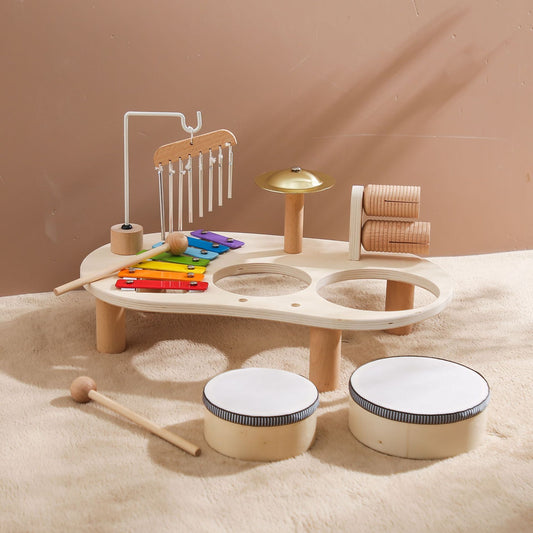
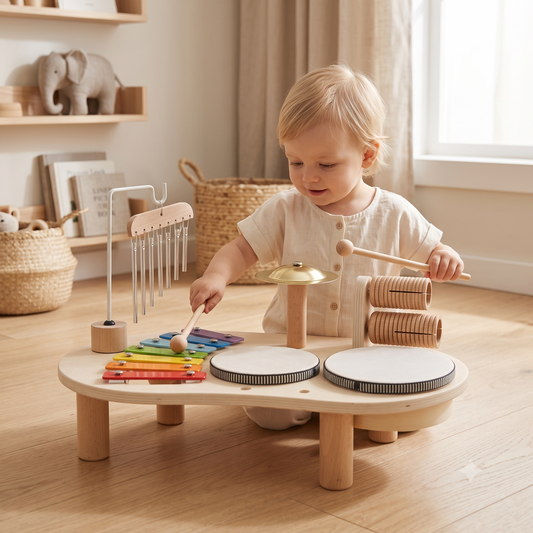
Montessori Wooden Music Station | The Maestro Conservatory
Regular price $71.99 USDRegular price$89.99 USDSale price $71.99 USDSale -
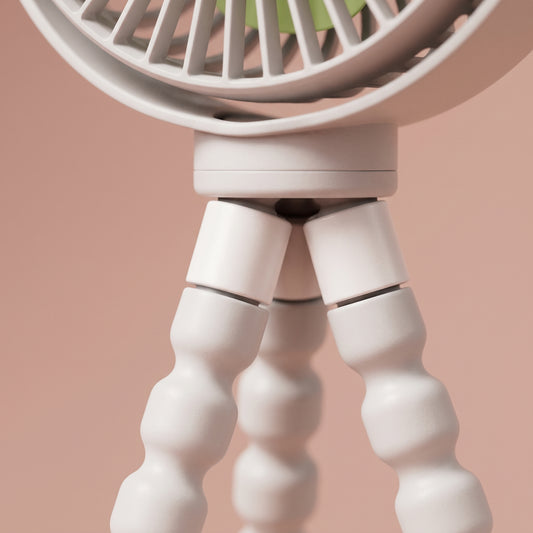
Stroller Fan Flexible Tripod 4000mAh | The Octo-Breeze Pro
Regular price $31.99 USDRegular price$39.99 USDSale price $31.99 USDSale -
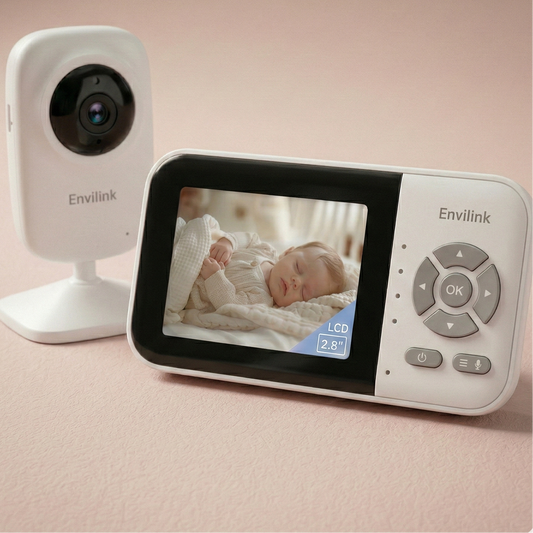
Baby Monitor Camera 1080p WiFi | The Vigilant-Air
Regular price $103.99 USDRegular price$129.99 USDSale price $103.99 USDSale -
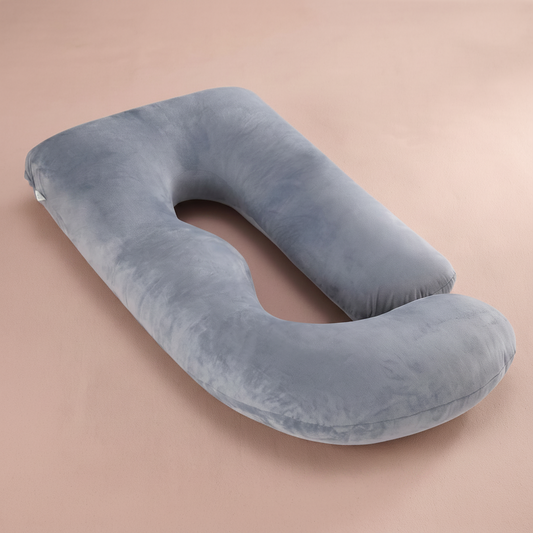
Pregnancy Pillow J-Shaped Full Body | The Materna-Cloud Luxe
Regular price $99.99 USDSale price $99.99 USDSale -
Foldable Travel Bassinet 3-in-1 | The Nomad-Elite
Regular price $127.99 USDRegular price